
Ox Alpha Benchmarks on OpenRouter: Provider Setup to Pac-Man Clone in 30 Minutes
Ox Alpha appeared on OpenRouter on August 20, 2026. No flashy launch. No big tech logo. Just a ‘reasoning model for coding, long-horizon agentic work, and production workloads.

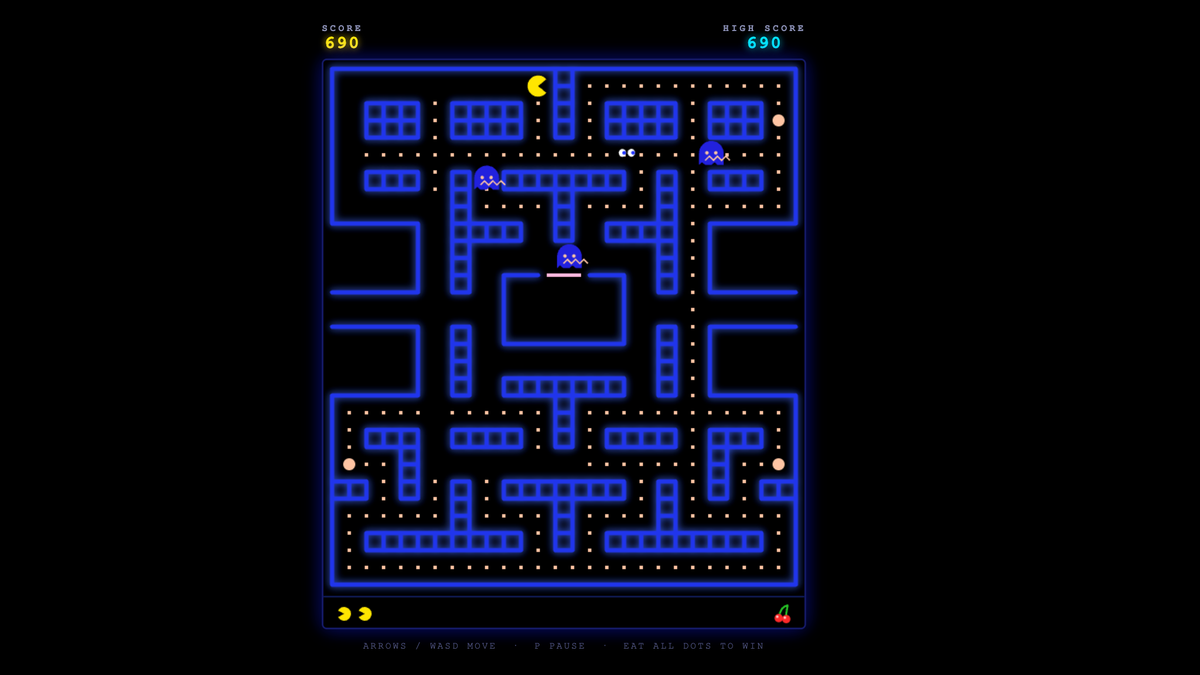
Ox Alpha appeared on OpenRouter on August 20, 2026. No flashy launch. No big tech logo. Just a reasoning model for coding, long-horizon agentic work, and production workloads.
1M-token context window. One week during preview. Provider unknown.
Benchmarks are saying its better than Fable 5, and its fingerprints look a lot like GLM 5.3. So it might well be a pre-release of GLM 5.3 Flash.
By the way, did I say it is currently free.
At lease for another day or two.
OpenRouter says it’s run by an anonymous third-party. Commentators point fingers at Z.ai. Some whisper Microsoft. Nobody will put their name on it yet.
Meanwhile, I was asking a different question.
What happens if I let something this powerful loose on a fun, non-trivial coding task?
My first tests with Ox Alpha
I didn’t start with theory. I started with mischief.
I asked it to write me a game.
Here's the exact prompt I used in OpenCode Desktop.
self-contained HTML file. Include all HTML, CSS, and JavaScript within
this single file.
Requirements:
1. Visuals: Use a black background with a classic blue neon maze layout.
Pac-Man should be a yellow circle with an animated chomping mouth.
The four ghosts (Blinky, Pinky, Inky, and Clyde) should have their
distinct classic colors (red, pink, cyan, orange).
2. Controls: Use the keyboard arrow keys to control Pac-Man's movement
smoothly through the maze corridor grid.
3. Gameplay Mechanics:
- Pac-Man must eat small yellow dots to score points.
- Four large flashing Power Pellets in the corners must turn the
ghosts blue and vulnerable for a short duration when eaten,
allowing Pac-Man to eat them.
- Ghosts should navigate the maze to chase Pac-Man.
- Include a score counter, a high score tracker, and a lives counter
(starting with 3 lives).
4. Game Loop: Implement simple collision detection. If a normal ghost
touches Pac-Man, he loses a life, resets position, and the game ends
when lives hit zero.
5. Win/Loss Conditions: Display clear "Game Over" or "Victory" screens
with a button to restart the game instantly.
Make the code clean, modular, well-commented, and fully functional
right out of the box without requiring external images or assets.
Save the game as game.html in the current project working directory
where the audio files live.
Thirty minutes later, I had a fully functioning Pac-Man clone:
- Single HTML file
- Playable in the browser
- Complete with synthesised sound
The sound wasn’t great. So I gave it six original Pac-Man audio samples and asked for a rewrite, adding this to the original prompt:
directory.
It calmly rewired the game. Better sound. Still a single HTML file. Still running.
You can argue about copyright. You can argue about licensing. But from a capability perspective?
This thing is not a toy.
Why this matters
That Pac-Man clone isn’t about games. It’s a signal.
Because if a free, anonymous model can generate a non-trivial game from a text prompt, integrate assets like audio files, and package everything into a single runnable file in half an hour, we need to admit that AI coding agents are now good enough to ship working software, fast.
Maybe not write OT controller code for a nuclear power plant, at least not yet.
For security teams, that’s both fantastic and terrifying.
- Fantastic, because the same capabilities can help you review code, propose patches, and automate boring backlog work.
- Terrifying, because attackers get the same tireless junior engineer, with the same ability to reason over large codebases and chain tasks together.
Ox Alpha itself may be "lab only" or experimentation only for most enterprises, given the anonymous provider and opaque data handling. But models like it are coming, whether you approve them or not.
The question isn’t “Should we use Ox Alpha?” It’s: “Are we ready for a world where models like this are everywhere?”
How to Set it Up
It works out of the box with OpenCode Desktop, and with Claude Code you need to edit a config file.
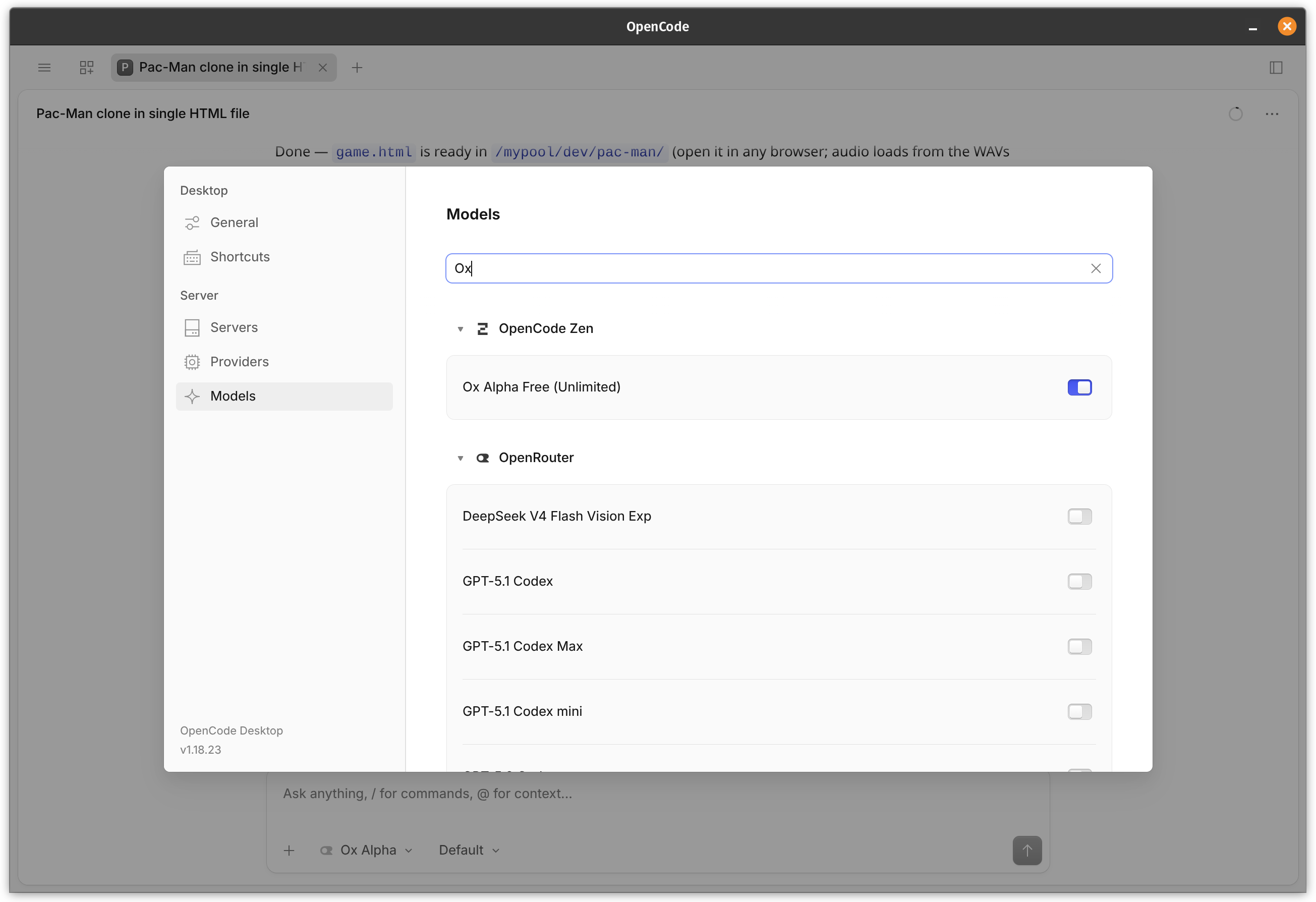
In OpenCode Desktop
Search for "Ox in settings under "Models". It there by default, you just need to switch the toggle on. If you already set up provider OpenRouter, it will also be listed under the OpenRouter models further down.
In Claude Code
First close Claude Code and make sure to back up your .claude/settings.json first.
Then you'll need to edit your .claude/settings.json and add some lines like this to the env section. Check your json syntax is still good.
"ANTHROPIC_BASE_URL": "https://openrouter.ai/api",
"OPENROUTER_API_KEY": "sk-or-v1-redacted",
"ANTHROPIC_AUTH_TOKEN": "sk-or-v1-redacted",
"ANTHROPIC_DEFAULT_OPUS_MODEL": "stealth/ox-alpha",
"ANTHROPIC_DEFAULT_FABLE_MODEL": "stealth/ox-alpha",
"CLAUDE_CODE_SUBAGENT_MODEL": "stealth/ox-alpha",
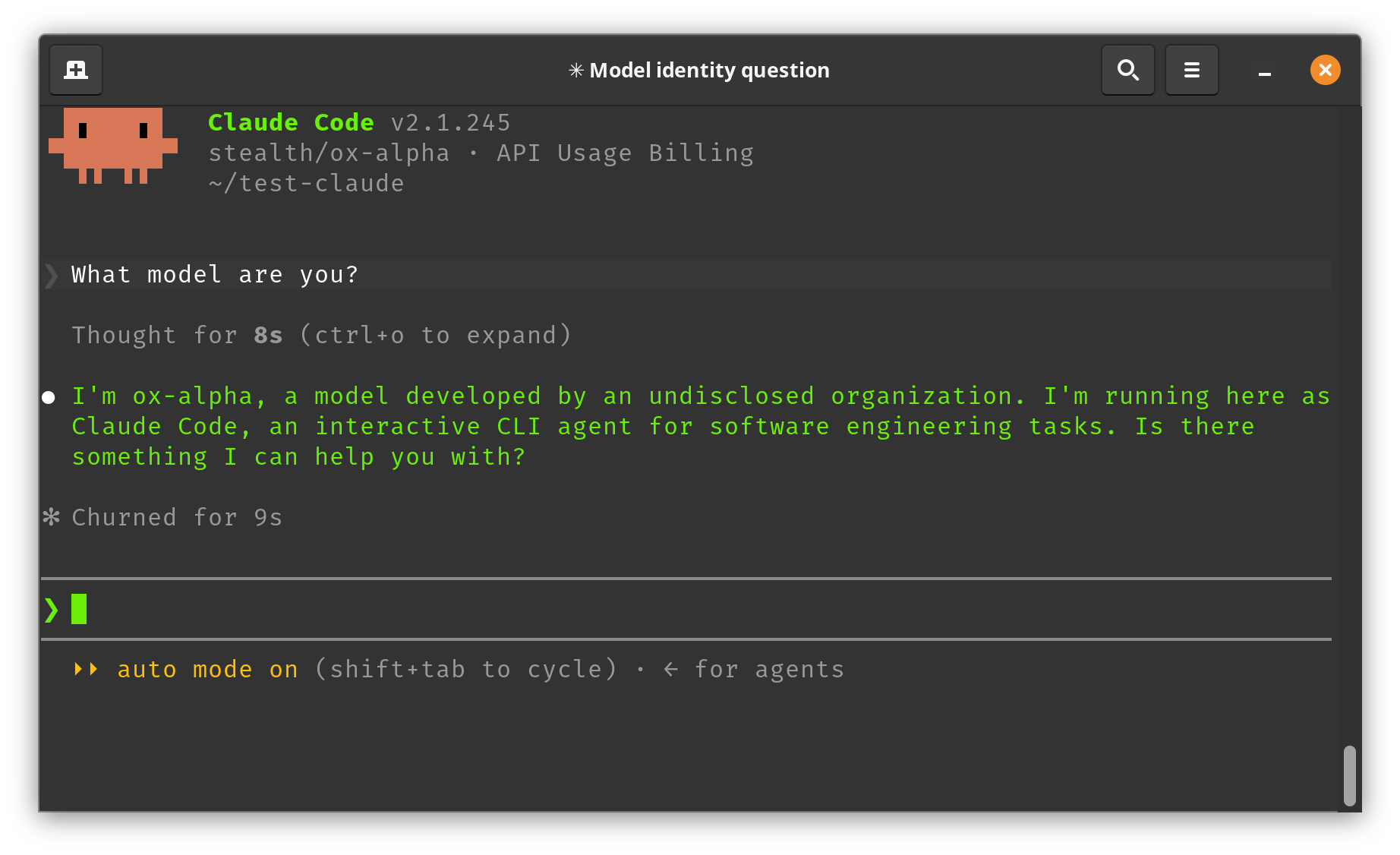
Heres what it looks like when its working in Claude Code terminal.
What has this got to do with Harry Potter?
Not a gamer but curious to see what it built? There's a clue in the links at the top of this page.